











 Data Sheet

CE Certified
This product conforms with essential health and safety requirements as set out in European Directives.

The PPE Online Shop is now Ruffles Workwear

Checking quantity prices...
VAT free
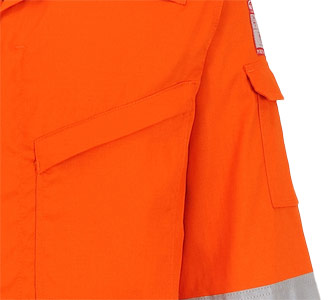
In order to comply with EN ISO 11611 all external pockets must be flapped, except for side pockets below the waist which do not extend more than ten degrees forward of the seam.
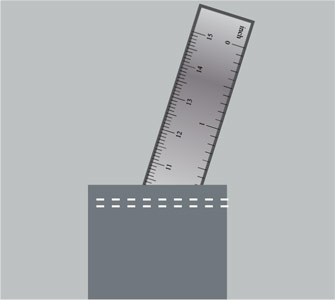
A single rule pocket with an opening not greater than 75mm is permitted behind the side seam on one or both legs.
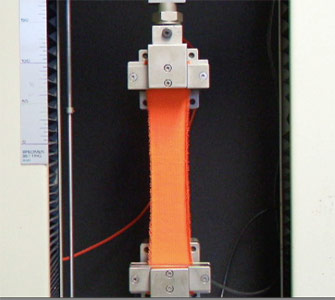
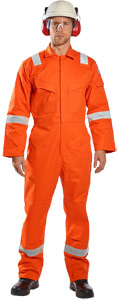
To meet EN ISO 11611 tensile strength must be at least 400N and tear strength must be at least 15N for class 1 and 20N for class 2.
For example:
Portwest's winning FR50 style has a tensile strength value of at least 500N and tear strength of at least 25N after 50 washes.
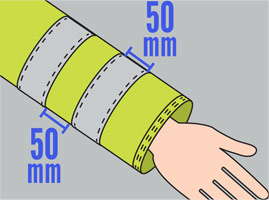
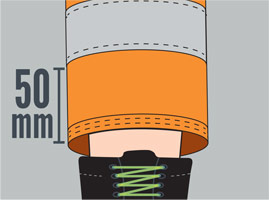
Reflective tape must be at least 50mm wide. Bands of reflective tape must be positioned at least 50mm apart.
Reflective tape must be positioned 50mm or more from the end of sleeve or leg.
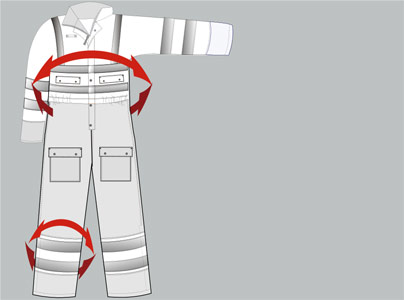
Reflective tape must encircle torso and/or limbs to be included in the calculation of the necessary square area of reflective tape. A gap (for fastening system or seam) in the band of reflective tape must be 50mm or less. The total amount of such gaps in every band must not exceed 100mm around the torso and 50mm around the sleeves and legs.
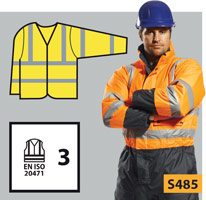
Highest level of protection - required for any persons working on or near motorways, dual-carriage ways or airports. Must incorporate a minimum of 0.80m2 of background material and 0.20m2 of retroreflective materials. (4 metres of 5cm wide reflective tape)
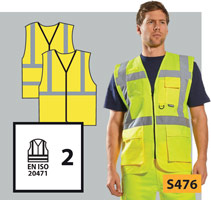
Required for any persons working on or near A and B class roads, also for delivery drivers. Must incorporate a minimum of 0.50m2 of background material and 0.13m2 of retro-reflective material. (2.60 metres of 5cm wide reflective tape)
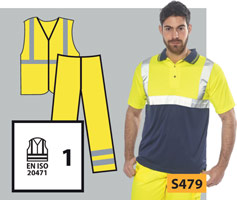
Minimum level of protection required for any persons working on a private road or to be used in conjunction with a higher classed garment. Must incorporate a minimum of 0.14m2 of background material and 0.10m2 of retroreflective material. (2 metres of 5cm wide reflective tape)
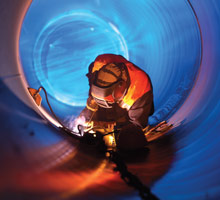
This international standard specifies minimum basic safety requirements and test methods for protective clothing for use in welding and allied processes (excluding hand protection). There are two classes with specific performance requirements.
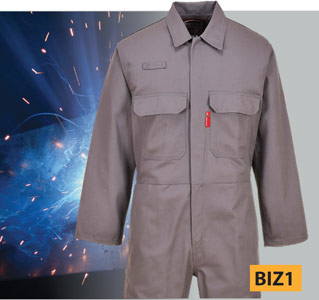
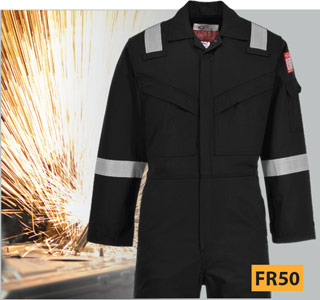
Class 1 is protection against less hazardous welding techniques and situations, causing lower levels of spatter and radiant heat.
Class 2 is protection against more hazardous welding techniques and situations, causing higher levels of spatter and radiant heat.
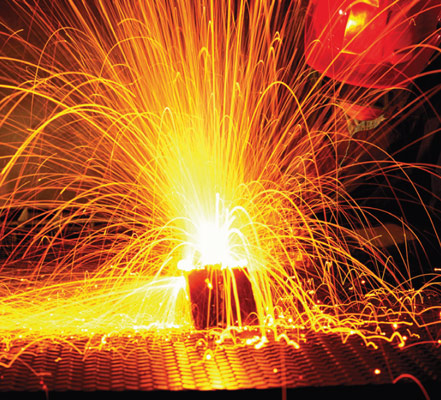
The EN ISO 11611: standard has the following parameters:
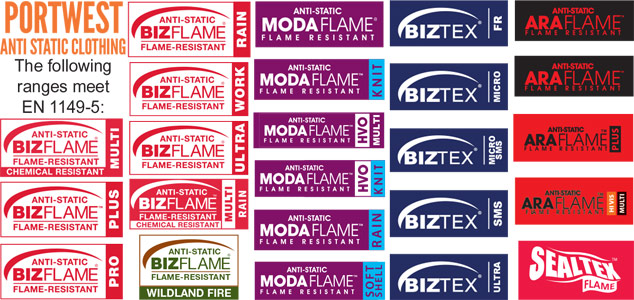
This European standard is part of a series of standards for test methods and requirements for electrostatic properties of protective clothing.
The standard specifies material and design requirements for garments used as part of a total earthed system, to avoid incendiary discharges.
The requirements may not be sufficient in oxygen enriched flammable atmospheres.
This European Standard is not applicable for specifying protection against main voltages.

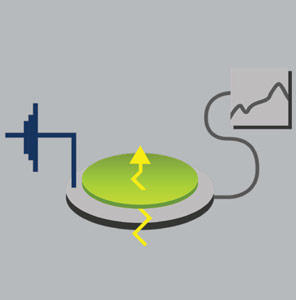
Test method for measurement of surface resistivity. Surface resistance measures the conductivity between two points on the surface of a fabric. The lower the resistance the higher the conductivity, resulting in charge going to earth.
Test method for measurement of the electrical resistance through a material (vertical resistance). This is the level of conductivity when measured through the depth of a fabric.

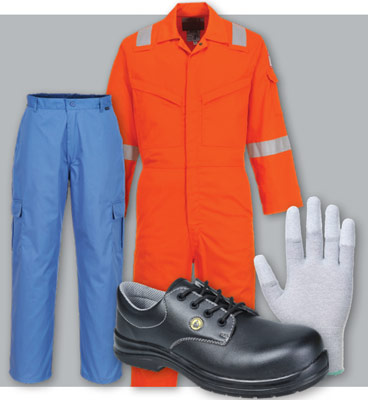
Test methods for measurement of charge decay. Charge decay measures how long it takes for an electric current to dissipate. The quicker it dissipates the higher the anti-static properties of the garment.
Please note the EN 1149-4 Garment Test is under development.
EN 1149-5 specifies the performance and design requirements to avoid static discharge for all electrostatic dissipative protective clothing as part of an entire earthed system, shoes, clothing & floor. The material meets the requirements.
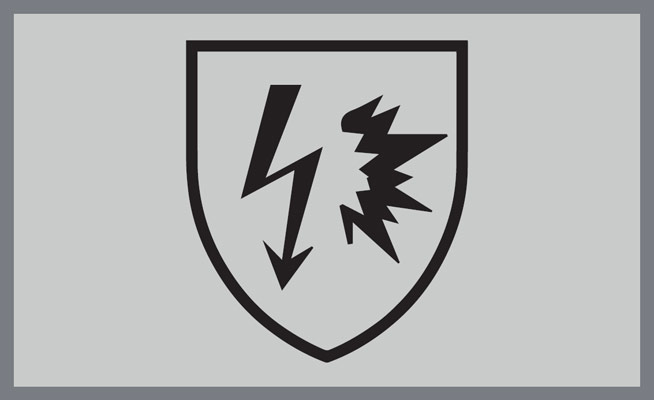
This standard investigates the fabric and garment's ability to protect against the thermal effects of an electric arc. This can be done via two test methods: 1. IEC 61482-1-1 (Open Arc Test Method) and 2. IEC 61482-1-2 (Box Test Method).
An electric arc is an intense flash of electricity which can result in numerous injuries.
Garments can be layered to achieve a better Cal rating. For example, a thermal layer may achieve an Ebt of 4.3 Cal/cm2, and an outer coverall may achieve an ATPV of 13.6 Cal/cm2. However, the combination ATPV/Ebt ratings will be greater than the sum of the two single layers, as the air gap between the two layers affords the wearer additional protection.
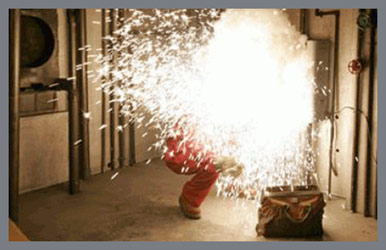
This test method aims to establish an ELIM (Incident Energy Limit) and an ATPV rating of a fabric and/or garment. These values, expresses as cal/cm², are the highest incident thermal energy to which the garment can be exposed without the wearer getting a second degree burn or the formation of holes in the fabric. The higher the cal rating of the garment or fabric, then the greater the protection for the wearer.
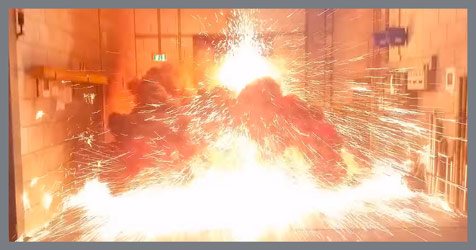
This test method aims to establish an APC1 or an APC2 rating of a fabric and/or garment (APC=Arc Protection Class). Test conditions for APC1 & APC2 try to simulate typical exposure conditions for a short circuit current of 4kA and 7kA respectively.
A single layer garment in most cases will pass APC1. For APC2, a thicker fabric or multi layer system is required.
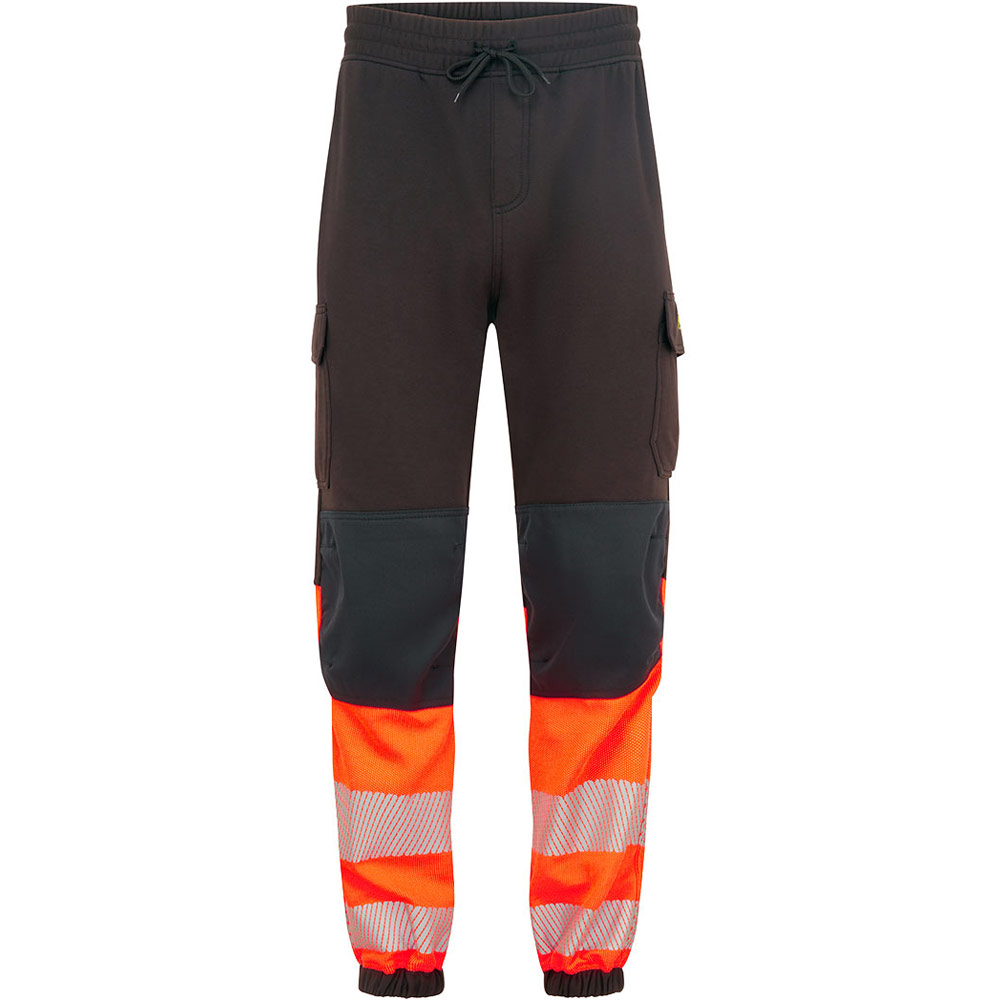
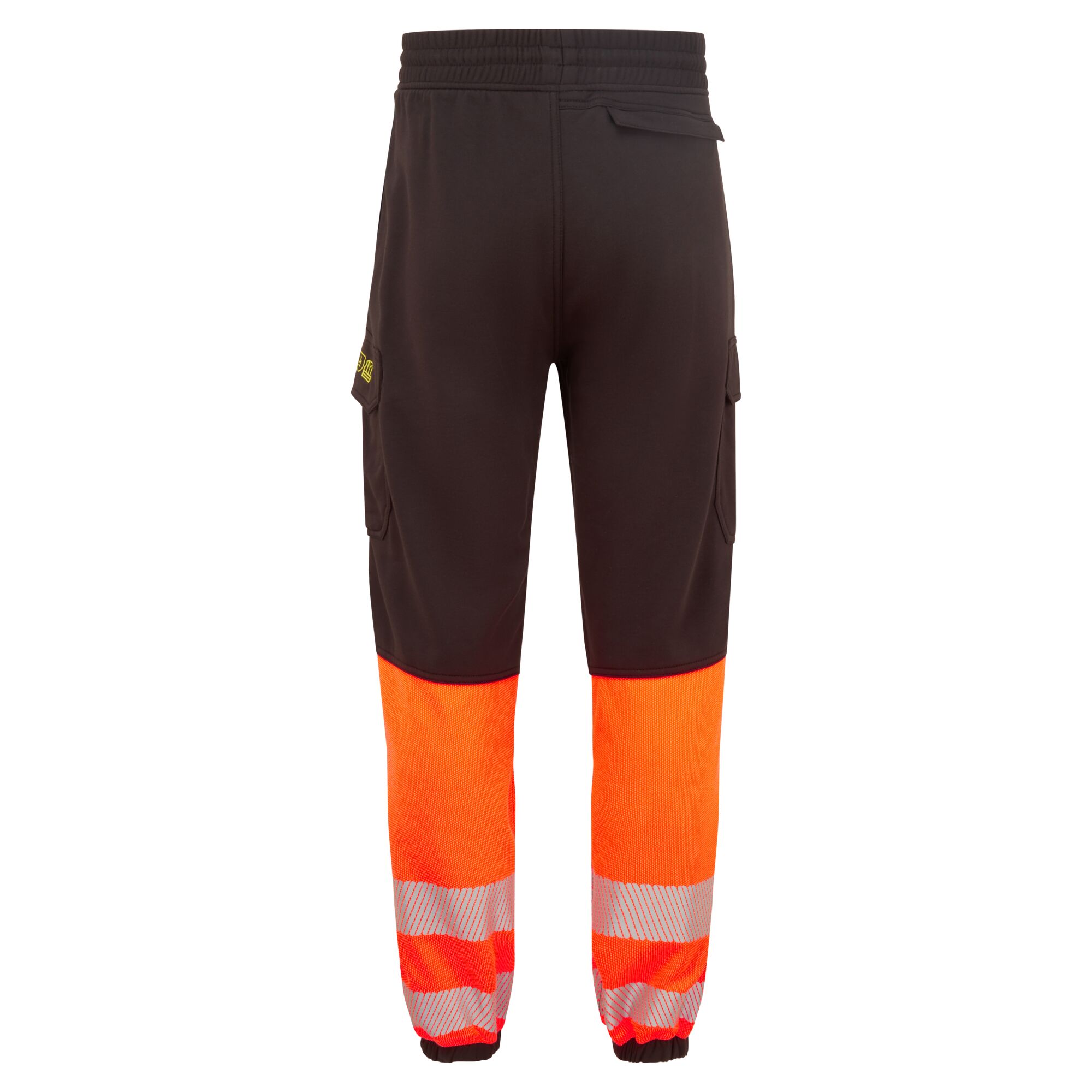
Sports-inspired workwear with modern fit, flexible comfort and strong hi-vis, trade and FR coverage.
Browse the wider PW3 range to compare related styles, features and options in one place.
View PW3 Range Modern Fit | Hi-Vis & FR | Trade Utility
This product conforms with essential health and safety requirements as set out in European Directives.
This product is CE marked as a Category 3 item for complex design.

This garment has heat applied reflective tape.

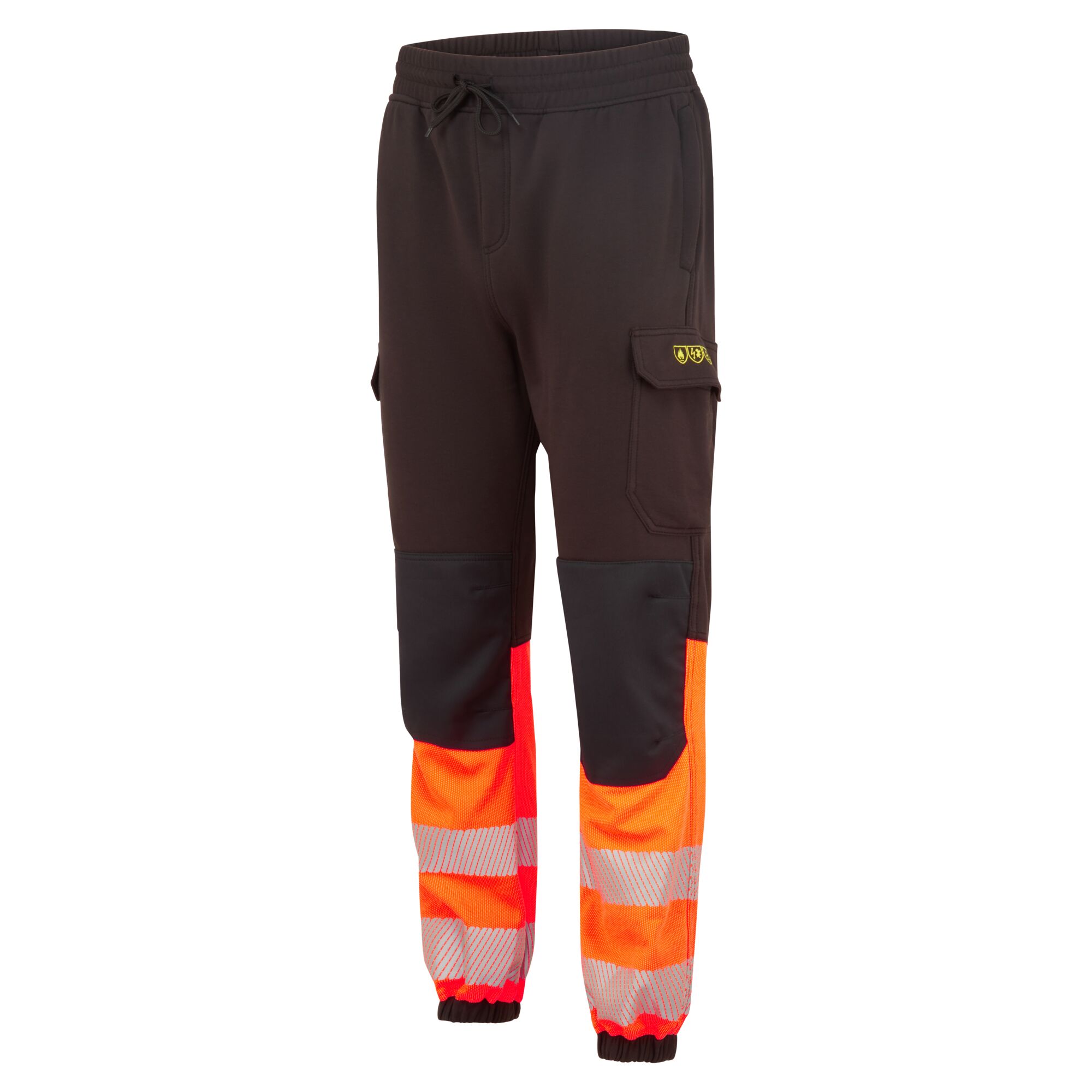
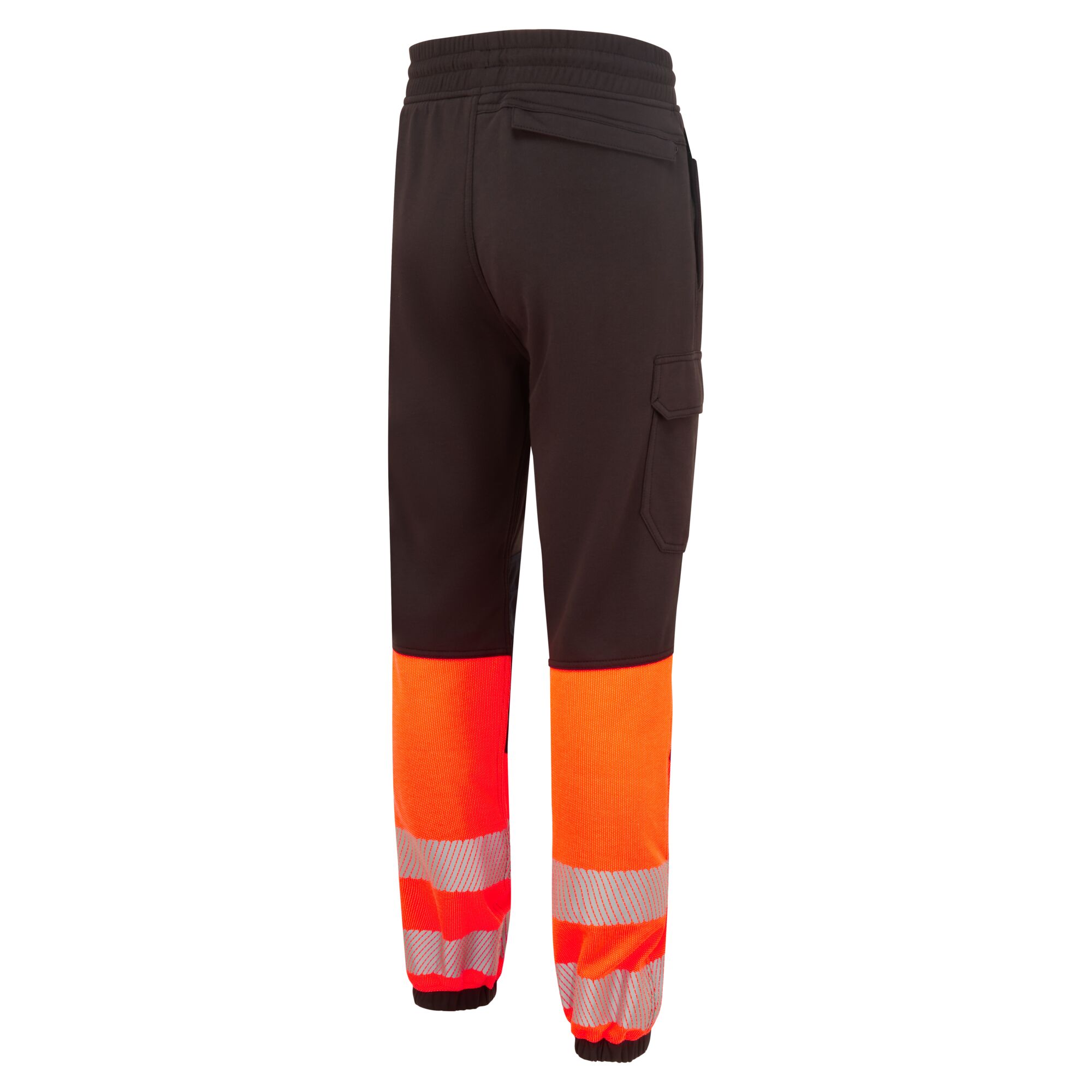
This garment features 5 pockets.

This features a fully elasticated waistband on the trouser which allows for all-day comfort for the wearer.
Portwest has been independently rated by Ecovadis for its environmental, social, and ethical performance and achieved a gold rating, meaning they are in the top 5% of globally rated companies.
The pillars taken into consideration include the environment, labour practices and human rights, ethics, and sustainable procurement.

Ideal for workers exposed to heat in their working environment. Features on this garment include, self fabric waistband, ribbed cuffs and 5 pockets making it comfortable and easy to wear. Class 1 high visibility gives the wearer added protection.
Ideal for workers exposed to heat in their working environment. Features on this garment include, self fabric waistband, ribbed cuffs and 5 pockets making it comfortable and easy to wear. Class 1 high visibility gives the wearer added protection.
Ideal for workers exposed to heat in their working environment. Features on this garment include, self fabric waistband, ribbed cuffs and 5 pockets making it comfortable and easy to wear. Class 1 high visibility gives the wearer added protection.
Ideal for workers exposed to heat in their working environment. Features on this garment include, self fabric waistband, ribbed cuffs and 5 pockets making it comfortable and easy to wear. Class 1 high visibility gives the wearer added protection.
Ideal for workers exposed to heat in their working environment. Features on this garment include, self fabric waistband, ribbed cuffs and 5 pockets making it comfortable and easy to wear. Class 1 high visibility gives the wearer added protection.
Ideal for workers exposed to heat in their working environment. Features on this garment include, self fabric waistband, ribbed cuffs and 5 pockets making it comfortable and easy to wear. Class 1 high visibility gives the wearer added protection.
Ideal for workers exposed to heat in their working environment. Features on this garment include, self fabric waistband, ribbed cuffs and 5 pockets making it comfortable and easy to wear. Class 1 high visibility gives the wearer added protection.
Specifications are subject to change - See Terms & Conditions for more info